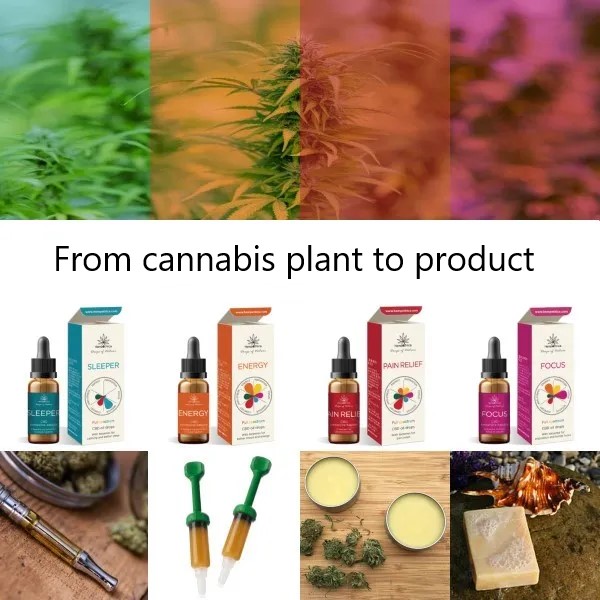
The process of preparing finished hemp products consists of several parts and is roughly divided into three phases. The first phase involves the production of biomass, the second phase involves the processing of biomass, and the third phase involves the preparation of final formulations, products and their packaging. The final step in the process is to bring these products closer to people and offer them quality products.
The production of Hemp biomass
The first part of the process is the production of hemp biomass. Hemp is an annual plant that is planted in late spring, in Slovenia it is somewhere in May, in the Primorska region it can be even earlier. It is recommended that atmospheric temperatures do not fall below 5 °C at night after planting. In this way, we plant or sow industrial hemp, while the cultivation of medical hemp takes place in more controlled conditions, usually in larger greenhouses, where we can control all the parameters and conditions of cultivation in a much more controlled way. Medicinal hemp is usually planted with cuttings, thus ensuring that each plant has the same genetic record and that all plants are grown from the same origin or "mother". With such a controlled method of cultivation, we ensure an identical profile of cannabinoids, terpenes, flavonoids in each cultivated plant, and the process can last indefinitely for several years.
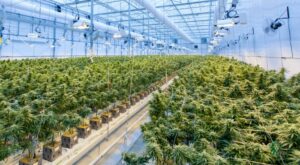
There are thousands of different varieties or strains of cannabis in the world. Which variety or strain we will grow in a certain season depends mainly on the purpose of using the final product. There are three main types of purpose, among which currently the most popular is the cultivation for the production of hemp flowers, from which we then obtain mainly cannabinoids (in addition to terpenes and other ingredients).
The second type of cultivation is used for the production of seeds, which are processed and from which hemp oil is obtained for the needs of the food industry.
The third type of cultivation is intended for the production of hemp stalks, which are processed into rope, paper, insulation, etc.
Among all the different varieties, the first type of cultivation is the most developed. With the process of crossing different strains of cannabis, new varieties were gradually formed, with the main task of crossing being mainly to enrich the amount of cannabinoids in individual varieties. With a very successful long-term cross-breeding process, we can find varieties in the world that have a very high content of individual cannabinoids (especially cannabidiol or CBD, tetrahydrocannabinol or THC and cannabigerol or CBG). CBG is considered the "mother cannabinoid" in the world because it is the first cannabinoid to be formed in a plant and from which all other cannabinoids are then synthesized with the help of hemp enzymes.
In recent years, seed houses engaged in crossbreeding have increasingly focused on the development of strains dominated by lesser-known cannabinoids, cannabidivarin (CBDV), cannabinol (CBN), tertahydrocannabivarin (THCV), cannabichromen (CBC), cannabitriol (CBT) and others. Each individual cannabinoid has certain therapeutic properties that have a beneficial effect on our body.
The planting phase is followed by a growth phase that lasts until September / October. Growth time is determined by the genetics of the plant, some strains need longer to mature, some less. Here we are talking about two types of strains (auto-flowering and photo-flowering), the difference between them is that the former is conditioned by genetics and usually itself passes from the growth phase to the flowering phase. The other type is tied to the amount of daylight. Namely, when the days begin to shorten and the amount of light begins to decline, there is a transition from the growth phase to the flowering phase.
On the other hand, we also distinguish ordinary seeds from feminized ones. Hemp is a single or dioecious plant, again depending on the variety. Monoecious plants are characterized by having male and female flowers on the same plant, while dicotyledons have only male or only female flowers on one plant. Feminized seeds, however, are characterized by the fact that only a female plant emerges from each seed, thus increasing the yield of an individual plant. Namely, we are only interested in obtaining cannabinoids from female plants and their flowers. For the cultivation of medical cannabis, we use the method of cloning or cuttings, so that the cutting has practically the same genetic record and consequently also the same cannabinoid and terpene composition.
The cultivation phase is followed by harvesting of material, which usually takes place in late September or early October. Harvesting is usually a group task, no matter what crop we harvest, the same goes for cannabis. People gather in the field, followed by harvesting. This part of the process also depends on several factors. Large growers do all this by machine, and smaller growers are subjected to manual harvesting, which is more time consuming, but in some cases more desirable, especially in cases where cannabis is grown for smoking and vaporization of its products. The crop must be properly dried and stored. Drying can be done mechanically and quickly, or it can be done slowly at a low temperature, thus preserving a large amount of terpenes in the flowers, which take care of the aroma. This is especially desirable in cases where the flowers are intended for smoking.
Hemp processing
The process of extracting active ingredients from cannabis is called extraction. This is a process by which we obtain active ingredients from plant material or. molecules produced by the plant during its life cycle. There are several types and possibilities of extraction, but they are conditioned mainly by the purpose of using the ingredients, the most popular or versatile is solid-liquid extraction, where the biomass is soaked in a solvent and after some time the insoluble residues are filtered off, while the active ingredients remain dissolved in the solvent. The simplest and currently most desirable in the world is extraction in ethanol, but there are other methods (extraction with supercritical CO2 or extraction in propane / butane). Extraction in ethanol is simple, as it takes place at normal pressure, while extraction with CO2 or propane / butane takes place at higher pressures (at 75-200 bar for CO2 or at 15-20 bar for propane / butane). The difference between these techniques is also in the profile of the components that are eliminated by a particular technique. Ethanol is a polar solvent and CO2 and propane / butane are non-polar solvents. As a result, in the case of ethanol, in addition to cannabinoids, a larger amount of chlorophyll and polar components is extracted from the biomass. On the other hand, in the case of CO2 or. propane and butane are extracted by a large amount of non-polar components, which include waxes and fatty acids.
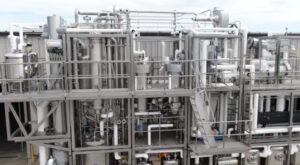
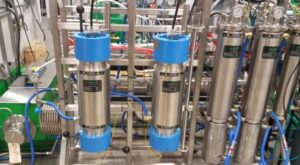
The extraction process may be followed by treatment with activated carbon and diatomaceous earth. The next step is the winterization process, which partially gets rid of waxes and fatty acids, and the concentration process, where the solvent is removed from the solution and a concentrated product is obtained. This product is called a raw product, better known as hemp resin (with a high content of CBDa, THCa, CBGa, etc.). It is a product with a cannabinoid content of about 50-60%, which is in acid form. This step is followed by a decarboxylation process, where the product is heated to a temperature> 120 ° C, where the process of removing CO2 from cannabinoid molecules takes place, thus giving the active form of cannabinoid molecules. This product is also called hemp resin (cannabinoid content approx. 55-65%), which contains the active form of cannabinoids (CBD, THC, CBG, CBDV, CBN, CBC, etc.).
The next step is to clean and purify the product. This step is usually called THC remediation. This part of the process is the most expensive part of the process, where the tetrahydrocannabinol molecule is removed from the hemp resin. There are several purification options, at this time chromatographic purification is currently the most popular method in the world. The procedure is very expensive, but with it we can selectively remove THC and other unwanted components. In this process, several fractions are obtained, which are combined at will, and the unwanted fractions are discarded.
Another type of purification or separation of unwanted components is low pressure distillation. This selectively removes waxes and fats, and two fractions are obtained separately. The first fraction is the terpene fraction and the second fraction is the cannabinoid fraction called distillate. The content of cannabinoids in the distillate is approximately 85-95%.
If we want to get pure individual cannabinoids, the distillation phase is followed by the crystallization process, which is usually carried out from non-polar solvents (pentane, hexane, heptane). From the crystallization process we get pure isolate which has an extremely high content (more than 99%). Cannabidiol isolate oz. CBD and cannabigerol or CBG, are currently very easily available in the market.
Preparation of final formulations of hemp products
There are already a huge variety of cannabis products in the world today, and it should be noted that different countries have different rules regarding permitted cannabis products. In most developed countries around the world, cannabis products are allowed for sale, but in most cases, the permit is conditional on the THC content of the final product. In some countries this limit is relatively high, in some places relatively low, and in some countries the presence of this cannabinoid is completely banned. Related to this is the production of final formulations and products.
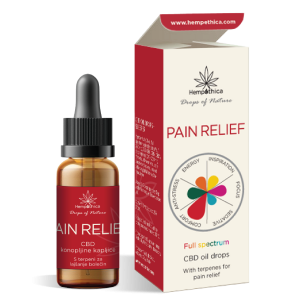
There are several types of formulations and products, among which the most popular and sought after product is hemp drops. In addition to drops, we also find hemp resin and hemp buds on the market. Among the newer products on the market are vaporizers or. electronic cigarettes containing cannabinoids and terpenes. Recently, products called "water-soluble" have been appearing on the market, which can be obtained in liquid or powder form and dissolved in water. These are formulations that are very popular in the pharmaceutical industry and have also been applied to the field of cannabis.
The next area where cannabinoids are actively used is the area of cosmetics. Cosmetics with added cannabinoids are considered highly desirable, where they have beneficial effects on our skin and treat certain skin problems.
In the company Widlab We develop the processes and formulations for a multitude of end products in-house in our development department. We believe that hemp products have great potential, as the global market is just (re)opening up for them.
Don't miss it
 Endocannabinoid system and use of cannabinoids in medicine
  In general about cannabis